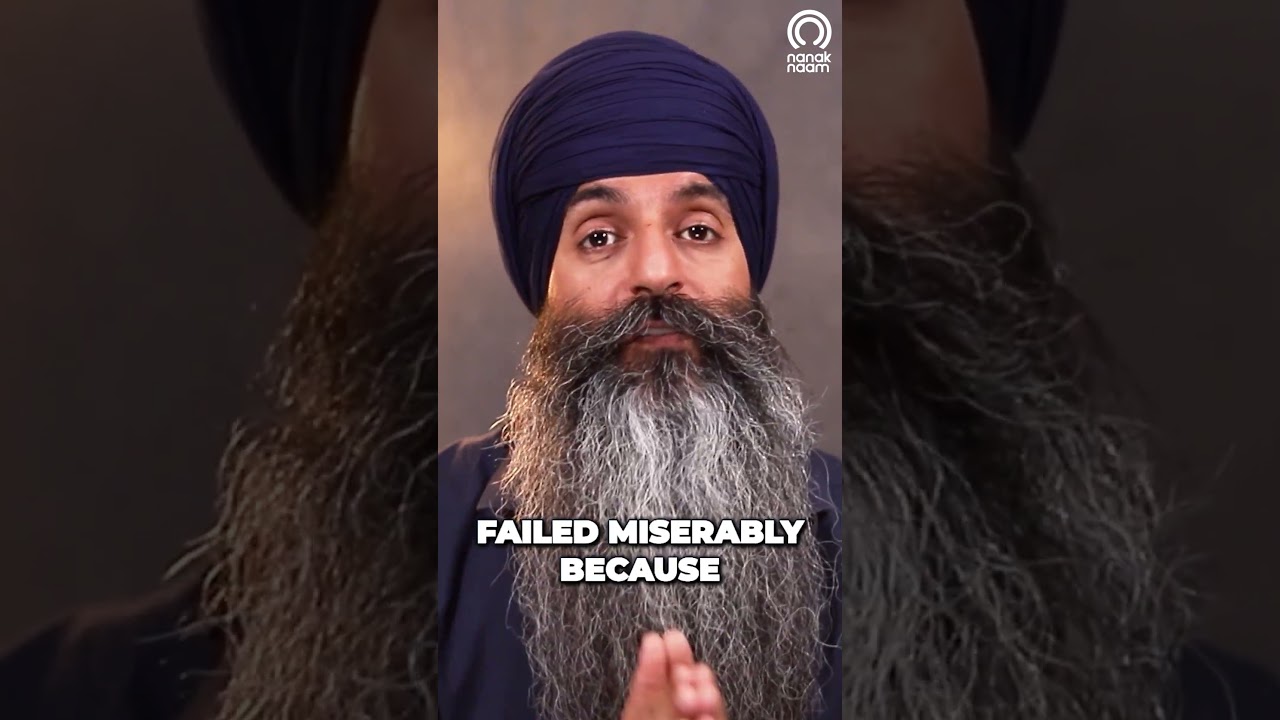
Following ICE raids in Hawaii that arrested 44 people, spiritual activist Valarie Kaur addresses the fundamental choice we face in dark times: retreat into fear and despair, or lift our gaze to join a long lineage of courageous resistance rooted in love rather than hostility. Drawing on ancestral Polynesian wisdom about navigating darkness and surviving apocalyptic times, she argues that revolutionary love—showing up at our front lines with flowers—is the only sustainable path to embodying the world we want to create.
What Happens When Terror Reaches Even Paradise?
Valarie Kaur arrived in Hawaii at a moment of acute crisis. The night before she spoke, ICE conducted raids across the islands. Forty-four people were arrested in Kauaii, flown to the island of Oahu, and transported in white vans to the federal detention center located directly next to Honolulu airport. For Kaur, this incident serves as stark evidence of a pervasive reality: "There is truly no place in this country where the terror that ICE has unleashed has not been felt, even even on these shores" (0:18s). The message is clear—the machinery of immigration enforcement reaches everywhere, even to islands that many imagine as separate from the mainland's political turbulence.
Kaur had come to Hawaii at the invitation of local leaders to work on strategies for resisting authoritarianism using what she calls "the tools of revolutionary love." But her week there became as much about receiving as about giving. She was greeted daily with leis and flowers, and she learned the word aloha—which means hello and goodbye, but also means love (0:44s). In that greeting and in the gesture of flowers lies a clue to the kind of resistance she would come to articulate.
What Can We Learn From Ancestral Polynesians About Surviving Darkness?
Kaur spent her time in Hawaii learning from the ancestral knowledge of Polynesian navigators and their descendants. She describes how they navigated thousands of miles of ocean by reading the stars, how they found kinship with the earth, sea, wind, air, and night sky. But more importantly for her message, she learned how they called their ancestors to their backs to be brave, and "the way that they survived apocalyptic times" (0:52s).
This historical knowledge becomes the foundation for her present-moment teaching. She reminds her audience: "In every turn through the cycle of human history, people have been thrown into darkness. And they have a choice" (0:75s). The point is not that darkness is new or unique to our time. Rather, humans have faced apocalyptic moments before, and they have survived them. The key was understanding that in those moments, a choice becomes available.
The choice Kaur identifies is stark: "Do we retreat into our fear or our privilege or our despair? Or do we lift our gaze and join our voice to that song of love and courage that has gone on long before us and will go on long after us?" (0:82s). This is not passive spirituality or denial of crisis. It is active discernment about where to place one's energy and intention in the face of systems designed to induce terror and despair.
How Does Hostility Become a Trap in Resistance?
Kaur addresses a critical failure mode in resistance work: the way that fighting against something can slowly transform the fighter into what they oppose. She puts it directly: "If we resist on the fumes of hostility, we won't last very long. We will become what we're fighting against" (0:138s).
This is not sentimentality. Sustained resistance requires a different fuel source. Hostility burns hot and fast, but it consumes the one who carries it. After months or years of acting from hostility—even against an authoritarian regime—a person begins to internalize the very authoritarianism they resist. They become rigid, dehumanizing, certain of enemies rather than of people who can change. The resistance becomes indistinguishable from the system it opposes.
By contrast, Kaur proposes: "If we chose to resist with love, the courage to love" (0:148s). This shift requires something harder than anger: it requires deliberate, sustained courage. Love in the context of resistance is not sentimentality or passivity. It is a disciplined choice to see the humanity in the people we oppose, to hold the vision of a different world, and to build that world in the present moment through our actions.
What Does It Mean to Come With Flowers to the Front Line?
Kaur's most concrete image for this kind of resistance is: "If we choose to come with flowers to our front line, whatever that front line is, then we will be embodying the world that we want on the other side of all of this ash" (0:151s).
This phrase deserves unpacking. A "front line" in resistance work might be a protest, a town hall, a detention center, a conversation with someone who disagrees, or a community organizing meeting. Whatever the site of resistance, Kaur suggests that the gesture of bringing flowers—of bringing beauty, care, tenderness—changes the nature of the encounter. It says: I oppose this injustice, and I do so as a whole human being who believes in beauty and connection, not merely as a warrior against evil.
When we embody the world we want through our resistance—when we show up with flowers rather than only with fury—we are not simply working toward change. We are already living the change. We are already demonstrating what justice with dignity looks and feels like. This matters because the world we build after systems collapse is shaped by the methods and spirit with which we resisted those systems.
What Is the Role of Chant and Prophecy in Dark Times?
Near the end of her reflection, Kaur shares a chant by the prophet Papihe: "That which is above will come down. That which is below will rise up. The islands shall unite. The walls shall stand firm. Aloha" (0:163s).
This chant is layered. On one level, it is eschatological—it speaks to an inversion of the current order. What is above (in power, in dominance) will fall. What is below (marginalized, oppressed, hidden) will rise. But it also holds paradox: "The walls shall stand firm." This is not a promise of chaos or dissolution of all structure. It is a promise that firm, grounded boundaries will hold—that the islands will unite, that community and kinship will be strengthened.
The word that caps the chant is aloha—love. This is the ground of everything. The prophecy is not one of vengeance but of love prevailing. For Kaur, invoking this chant in a moment of ICE raids and federal detention is a way of anchoring herself and her listeners in a longer historical arc and a deeper spiritual conviction: that love—the same aloha that greeted her with flowers every day—is not soft or passive, but is the most enduring force for transformation.
Why Is Simply Speaking Truth Now an Act of Courage?
Kaur addressed a gathering at the YWCA in Oahu, whose mission statement is "to eliminate racism, empower women, promote peace, justice, dignity, and freedom for all." She notes: "That should not be a controversial thing, but right now living into that mission statement, even saying those words is a courageous act" (0:115s).
This observation captures the climate of authoritarianism. In authoritarian regimes, even the plain statement of human values becomes dangerous. To say publicly that women should be empowered, that racism should be eliminated, that dignity is non-negotiable—these statements invite scrutiny, risk, potential retaliation. The regime works partly by creating a climate where basic truth-telling feels transgressive.
Kaur's gathering at the YWCA was called "Belonging: The Courage to Love" (0:132s). The pairing of these concepts—belonging and the courage to love—suggests that love is not something we naturally or easily do. It requires courage. It requires the risk of vulnerability, of being rejected, of being hurt. But it is also the path to genuine belonging, to being part of a community grounded in shared values rather than shared fear.
Where to Go From Here
For those moved by Kaur's reflection, the next step is personal and communal discernment: What is your front line? Where are you called to resist in this moment? And how can you do so from a place of love rather than hostility, bringing flowers rather than only fury?
Kaur's newsletter at Revolutionary Love offers resources and practices for this work. More broadly, her message invites us to study the wisdom of those who have survived apocalyptic times before us—whether Polynesian navigators, Indigenous peoples, or other lineages of resistance—and to ask: What did they know that we need to learn? How can we ground our resistance not in rage alone, but in the deeper sustaining force of love and courage?
In Hawaii, in this moment, Kaur has modeled what it means to arrive in a place of crisis, to learn from local wisdom, and to reflect back a vision of how to resist not just with conviction but with grace. The work now is for each of us to take that vision into our own contexts and ask: How do I embody revolutionary love in my resistance to authoritarianism?